Case Western Reserve University
Project Details
Facade System: Double-Skin Façade
Product: VetraFin G-Series System
Scope: Facade Engineering & Material Supply
Completion: 2014
Project Credits
Owner: Case Western Reserve University
Architect: Perkins + Will
Glazing Contractor: United Glass + Panel Systems
General Contractor: Private
Photo Credit: Howard Tucker
Awards
2017 Award of Excellence, AIA NOVA Design Award
2016 Design Excellence – Distinguished Building Award, AIA Chicago Chapter
2016 First Prize Winner – Education Buildings, ArchMarathon Awards
2015 Interior Honor Award, AIA Chicago Chapter
2015 Merit Award, AIA Washington DC Chapter
2015 Award of Excellence, AIA Georgia
2015 Shortlist – Education Category, World Architecture Festival
2015 Design Citation, American School & University Architectural Portfolio
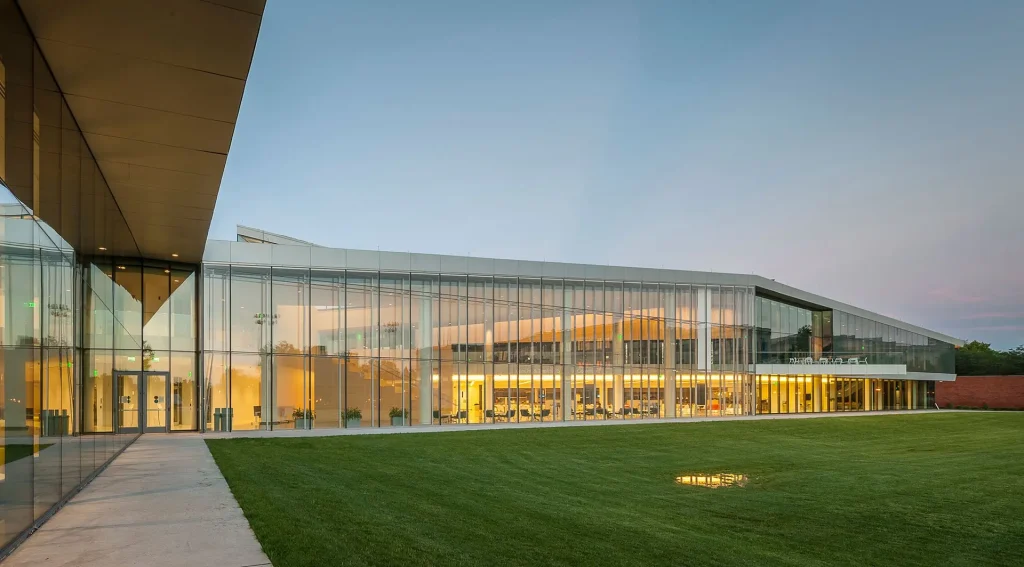
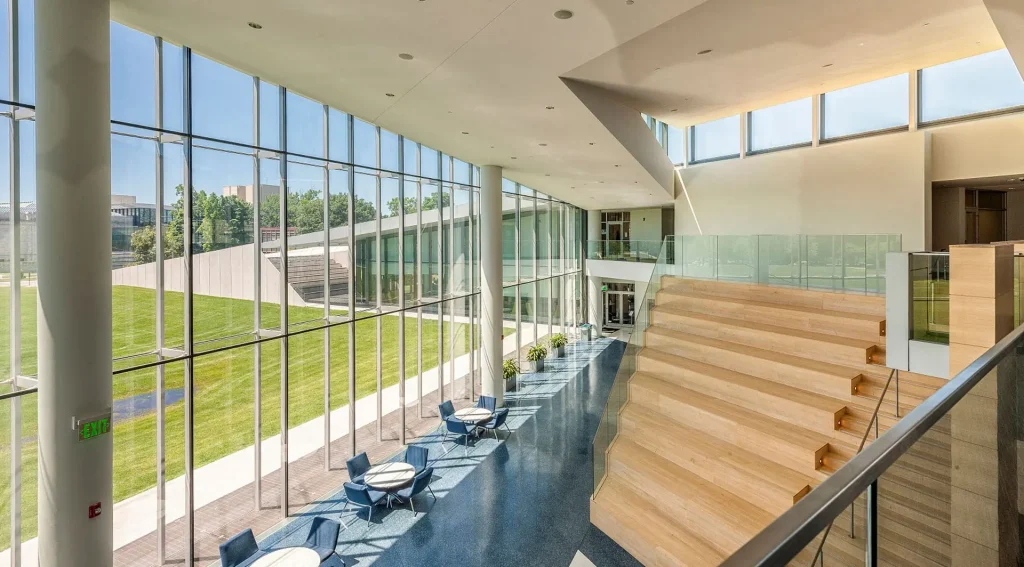
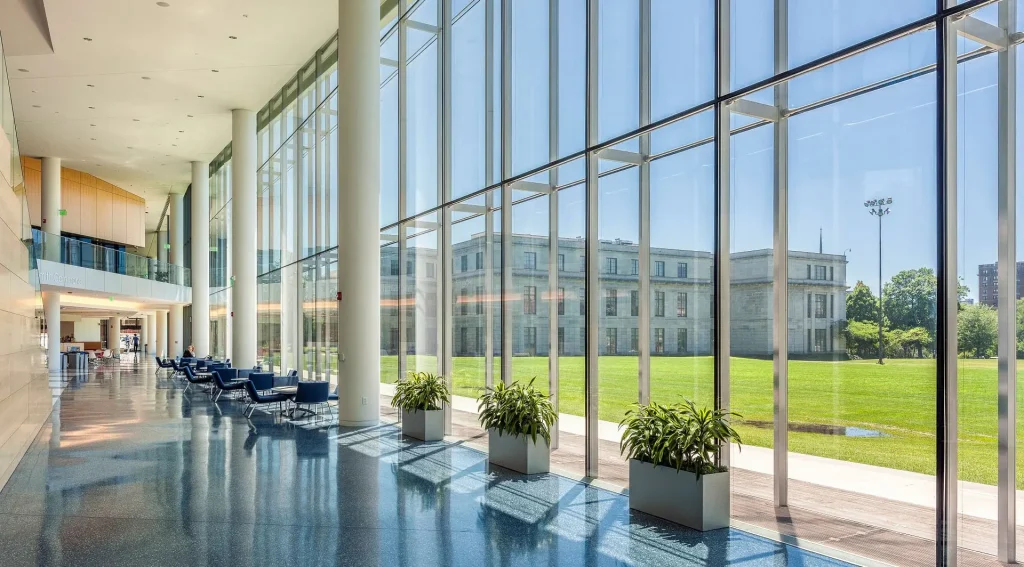
The LEED Gold certified Tinkham Veale University Center and its panoramic, double-skin glass façade is the newest addition to Case Western Reserve University’s Campus, spanning 89,000 square feet. Unifying the campus physically and philosophically through its grandeur and iconic design, it sits at the heart of the new campus and captures the spirit of its branding anthem, “Think Beyond The Impossible”. The stunning openness of this active glass façade makes the center feel like a bridge, rather than a barrier, between the east and west sides of the campus. Sustainability, energy efficiency and optimized performance were key factors in Perkins & Will’s design of the double-skin façade system. The team explored several options early-on in the design pr0cess to control solar heat and light gain, and multiple system types and configurations were studied to determine cost-effectiveness, durability and function- including an extensive exploration into airflow through the double-skin cavity. Since passive ventilation was not a workable option, the 3-foot wide cavity between the exterior monolithic façade and the interior insulated glass façade uses mechanical ventilation to control the transfer of heat, while allowing for ease of maintenance. Utilizing Sentech’s VetraFin G-Series System, the final combination of architectural elements served to meet all of the project’s energy, functional and aesthetic goals while allowing for complete transparency and a structural glass solution that serves to minimize energy usage in both winter and summer seasons.